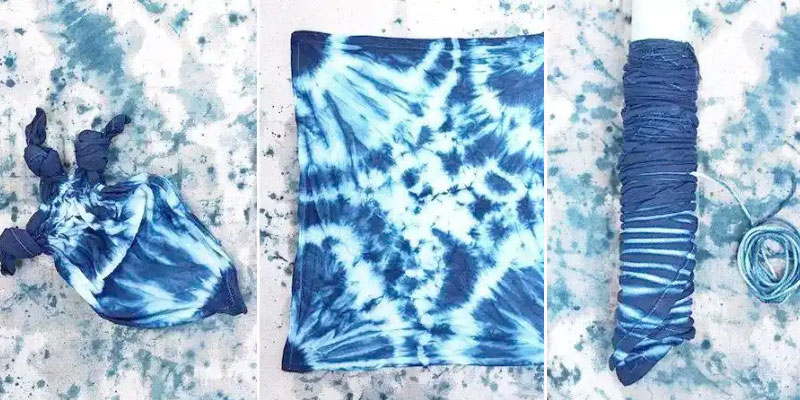
From Indigo Tie Dye Merch to distinctive patterns, mastering just three fundamental techniques—folding, rod-binding, and knot-tying—paired with cotton or linen fabrics and simple tools, enables you to hand-dye richly layered tie-dye creations. Each piece of fabric blossoms with its own unique beauty.
1: Tie Dye Merch:Materials and Tools Required
Before embarking on your journey into handmade fabric creation, it is essential to prepare the necessary materials and tools. You will need to gather the following materials and tools:
- Indigo dye kit, available for purchase online.
- Baking soda, used to adjust the depth of the dye colour.
- Cotton or linen garments or fabric, as the items for tie-dyeing.
- Large plastic tub, for mixing the dye and baking soda, and soaking the fabric.
- Rubber gloves, to protect hands from dye staining.
- Rectangular wooden board for laying fabric flat.
- Rubber bands and thick cotton thread for securing different sections of fabric.
- PVC pipe and long wooden stick for stirring the dye.
- A piece of lining fabric to place beneath the board, preventing dye from staining the table surface.
- Scissors for trimming excess rubber bands and cotton thread.
Ensure you have all these materials and tools ready before you begin the project.
2.Tie Dye Fabric Selection and Preparation
Next, selecting suitable fabric or garments is a crucial step. Opt for natural fibre fabrics such as cotton, linen, silk, or muslin. These natural fibres are ideal for tie-dyeing. Additionally, you will need to prepare auxiliary tools including wooden boards, backing fabric, and scissors to lay a solid foundation for subsequent tie-dyeing operations.
3.Basic Tie Dye Merch Techniques
- Folding Tie-Dye Technique
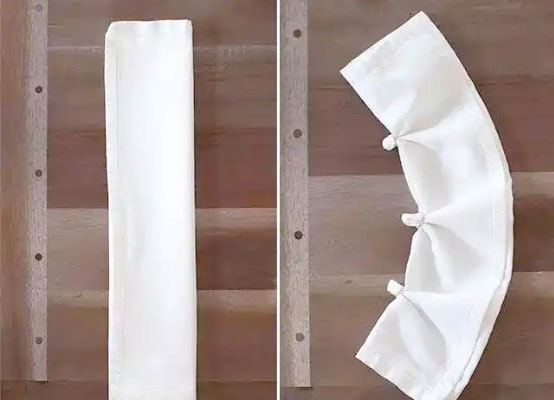
First, let us explore several fundamental tie-dyeing techniques. Commencing with the folding method, this involves folding white fabric lengthwise to create an accordion-like effect. Building upon the folded tie-dye technique, we can further explore the cross-fold method. Take the pre-folded fabric and fold it again horizontally. Secure it by clamping two rectangular wooden boards across the fold, then tightly bind the boards and fabric together using elastic bands in a criss-cross pattern. Finally, for added stability, apply a secondary binding with cotton cord in a warp-and-weft pattern, ensuring the fabric remains firmly secured.
- Stick-Wrapping Technique
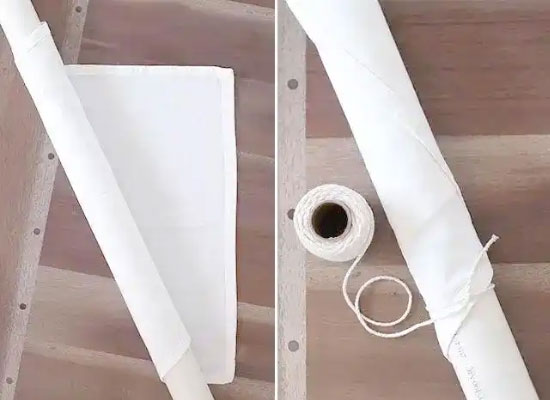
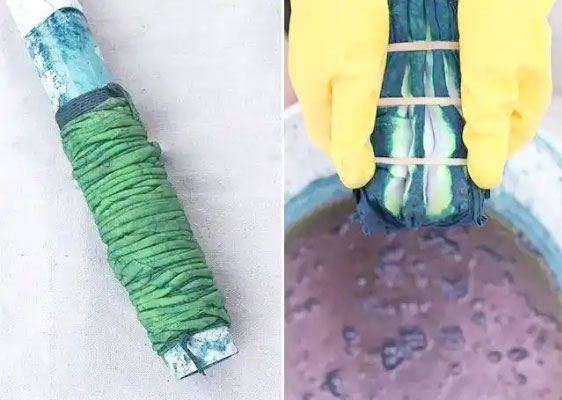
The second wrapping method is the stick-wrapping technique. The fabric is tightly wrapped around a PVC pipe to ensure a snug fit, then the lower end of the fabric is securely fastened with cotton cord to hold it in place. This wrapping method is commonly used in situations requiring more robust support, such as when crafting garments or textile artworks.
When implementing the rod-binding technique, we must wind the cotton cord upwards at regular intervals. After approximately ten turns, one may then push the fabric and cord upwards by hand, working from the bottom upwards. Through this method, we can progressively secure all fabric tightly in place.
- Knot-Tying Technique
Next, we introduce the third method: the knot-tying technique. First, fold the fabric into an accordion shape. Then, on one side of the fabric, tie three tight knots using elastic bands, spaced at equal intervals. Note that the number of knots can be adjusted flexibly according to the size of the fabric.
After completing the knotting on one side, repeat the process on the opposite side, this time alternating the knots. Continue using elastic bands, working inward from each existing knot to further secure the fabric.
- Free Creation
Employing the three fundamental techniques outlined above, you may freely unleash your creativity by combining diverse materials with fabric to produce distinctive patterns and effects. Experiment with integrating stones, plastic, buttons, clips and other varied materials with fabric, employing methods such as binding or folding to generate countless unique designs.
4.Indigo Dyeing Process and Effects
- Preparation of Tie Dye Cloth
Next, we shall commence the indigo dyeing process. First, add an appropriate quantity of lukewarm water to the large plastic tub. Then, slowly pour the indigo powder into the tub, stirring continuously in one direction until the dye is thoroughly dispersed.
Next, add a small amount of baking soda to the bucket and continue stirring. Once the dye and baking soda are thoroughly combined, allow the mixture to rest for approximately one hour. You will observe that, over time, the dye gradually transforms into an oily substance and floats to the surface of the liquid. This indicates that the dye is now ready for the next stage of the process.
- Fabric Dyeing and Drying
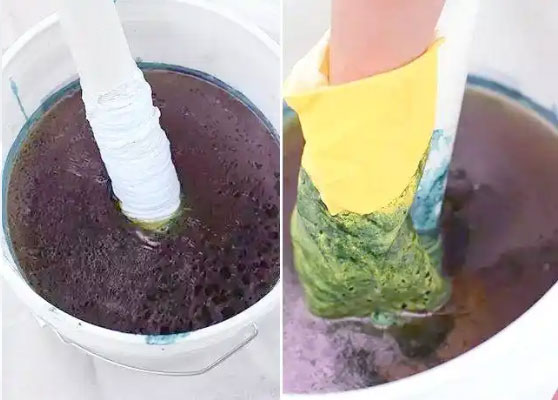
Next, place the bundled fabric in clean water for rinsing, then gently squeeze out any excess moisture. Subsequently, fully immerse the fabric in the indigo dye bath and gently knead it to ensure thorough dye absorption.
After approximately five minutes of immersion, carefully remove the fabric from the dye bath. At this stage, the freshly extracted fabric will exhibit a greenish hue. However, as it is left to rest in the air for several minutes, it reacts with oxygen and gradually transforms into a deep blue colour. Finally, be sure to inspect your fabric meticulously; if no white areas remain, this indicates the dyeing process is essentially complete.
- Finished Effect
The most anticipated moment has finally arrived. Carefully undoing the elastic bands and cotton cord, the unique piece of fabric unfurls like a blossoming flower, utterly captivating. A gentle rinse with clean water completes the process, and a brand-new piece of fabric is born.
Through varied techniques—such as folding, combining clips, and knotting corners—diverse visual effects can be achieved. This design not only enhances the fabric’s dimensionality but also creates a distinct visual beauty that leaves one in awe.
Finally, regardless of which technique you employ above, or whether you tie it freely, simply allow the thoroughly soaked floral fabric to bask fully in the sunlight, and you shall create a truly unique handmade cloth.
Related posts